


For frequent flyers, executive travelers, and international globetrotters, a suitcase is far more than a container—it is a mobile vault for personal assets, sensitive electronics, and tailored attire. When selecting high-ticket luggage, the central debate inevitably centers on material engineering: 6061 Aerospace-Grade Aluminum vs. High-Impact Polycarbonate. While polycarbonate has dominated mass-market travel, discerning travelers increasingly turn to aluminum. Here is a definitive technical comparison detailing why aluminum luggage remains the gold standard for long-term durability and security.
1. Structural Integrity: Tensile Yield vs. Plastic Flexion
Polycarbonate is fundamentally a thermoplastic resin. While lightweight and flexible, its primary mechanism for absorbing impact relies on deformation. Under severe pressure—such as automated airport baggage carousels or cargo hold compression—polycarbonate shells flex inward, transferring stress directly to the delicate contents within. Over time, repeated thermal cycles and mechanical strain cause micro-fractures along stress points.
In contrast, aerospace-grade aluminum-magnesium alloy boasts a structural yield strength capable of withstanding immense external forces. Instead of flexing onto your laptop, camera gear, or luxury timepieces, an aluminum shell acts as an unyielding structural armor. Minor travel marks on aluminum do not compromise its structural rigidity—they form an authentic patina of a well-traveled lifestyle.
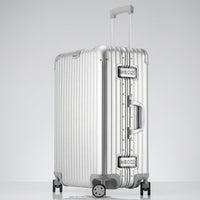
 100% 6061 Aluminum Alloy
The Masterpiece — The Legacy Aluminum Luggage
Impenetrable zipperless aluminum chassis with dual TSA mechanical latches, riveted armor corner guards, and whisper-quiet 360° spinners.
Shop The Masterpiece → High-Impact Polycarbonate
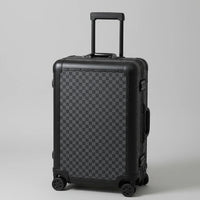
The Aero-PC Vanguard — Carbon-Texture Case
Ultra-lightweight polycarbonate shell with 180° smart-open flat access, carbon-texture finish, and integrated keyless TSA latch system.
Explore Vanguard Series →2. Zipperless Security Architecture: Mechanical Latches vs. Puncturable Zippers
The weakest link in traditional polycarbonate luggage is almost always the zipper. Standard nylon or coil zippers can be breached in under three seconds using a common ballpoint pen—a well-documented vulnerability in airport transit security. Once punctured, the zipper tracks separate silently without tripping TSA locks.
Luxury aluminum travel cases eliminate zippers entirely. In their place, a heavy-duty extruded aluminum interlocking tongue-and-groove frame seals shut with dual mechanical TSA-approved draw-bolt latches. This creates a tamper-proof, weather-resistant barrier that cannot be punctured, sliced, or forced open without specialized industrial tools.
3. Comparative Feature Analysis
| Engineering Parameter | 6061 Aerospace Aluminum | Premium Polycarbonate |
|---|---|---|
| Impact Resistance | Unyielding Outer Shield | Flexes Under Pressure |
| Closure Mechanism | Dual Zipperless TSA Latches | Puncturable Nylon Zipper |
| Aesthetic Longevity | Develops Unique Travel Patina | Prone to Scratches & Dullness |
| Weather & Moisture Seal | Rubber Gasket Sealed Frame | Permeable Zipper Fabric |
Frequently Asked Questions
Q: Is aluminum luggage heavier than polycarbonate?
While aluminum carries a slight weight premium (typically 1.5 to 2 lbs heavier for a carry-on size), precision 360° whisper-quiet ball-bearing spinners absorb the weight completely during movement, ensuring effortless one-hand gliding across airport terminals.
Q: Are aluminum carry-ons approved by international airlines?
Yes. Aluminum carry-ons engineered within standard international sizing (such as 20-inch and 21-inch dimensions) are 100% TSA and IATA compliant for overhead storage across Delta, Air Canada, Emirates, Lufthansa, and 50+ global carriers.
Comments