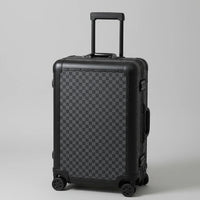
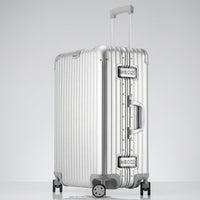


When evaluating premium travel gear, discerning executive travelers inevitably reach a critical financial question: Is spending $400 to $1,000+ on an aluminum suitcase a genuine long-term investment, or merely an overpriced status symbol? In an era dominated by disposable $120 polycarbonate luggage, aluminum carry-ons represent a significant initial capital outlay. However, when analyzed through the lens of material longevity, replacement frequency, gate-check avoidance, and asset protection, the financial equation shifts dramatically. Here is the definitive ROI analysis evaluating whether aerospace-grade aluminum luggage pays for itself over a decade of travel.
1. The Financial Fallacy of "Cheap" Polycarbonate Luggage
The average frequent flyer (traveling 8 to 15 times per year) replaces their mass-market polycarbonate or nylon suitcase every 18 to 36 months. The failure points are universally predictable: split zipper coils, cracked corner shells caused by baggage handling drop impacts, or snapped wheel housings under heavy loads.
While a $120 plastic suitcase appears economical upfront, purchasing four replacement bags over a ten-year period yields a cumulative expense of $480 to $600+—excluding inflation, unexpected mid-trip replacement panics, and ruined personal belongings due to shell punctures. For a deep-dive into the structural engineering differences between these two materials, read our Aluminum vs. Polycarbonate Executive Durability Guide.
| Financial Parameter (10-Year Horizon) | Standard Polycarbonate Luggage | 6061 Aerospace Aluminum Case |
|---|---|---|
| Initial Purchase Price | $120 - $150 USD | $395 - $495 USD |
| Expected Lifespan | 2 to 3 Years (80-100 total flights) | Lifetime / 10+ Years (500+ flights) |
| 10-Year Replacement Cost | $480 - $600 USD (3-4 replacements) | $0 USD (Single Lifetime Purchase) |
| Cost Per Flight (100 Flights) | $5.00 to $6.00 per flight | $3.95 per flight (Decreases each year) |
| Risk of Mid-Trip Structural Failure | High (Zipper puncture, cracked plastic) | Zero (Riveted aluminum chassis) |

The Monarch — 6061 Aerospace Aluminum Carry-On
Forged from 6061 structural aluminum alloy. Zipperless dual TSA mechanical latches, reinforced corner armor, and lifetime structural integrity.
2. Asset Protection: Protecting Thousands in Electronics & Valuables
For executive travelers, a carry-on rarely contains just clothing. It transports thousands of dollars in high-value assets: MacBook Pro laptops, DSLR camera bodies, high-end timepieces, noise-canceling headphones, and confidential documents.
Polycarbonate shells flex under crush forces (such as heavy baggage stacked on top in overhead bins or cargo holds). A sudden flex can crack a $2,500 laptop screen or crush camera lenses. In contrast, 6061 aerospace-grade aluminum possesses an unyielding tensile yield strength. It creates an armored vault surrounding your equipment, absorbing impact kinetic energy before stress reaches the interior chamber. Protecting a single laptop screen from damage pays back the entire cost of the aluminum case in a single flight.
3. The Value of Patina vs. Scratched Plastic
A major psychological difference between plastic and aluminum is how the material ages over time:
- Polycarbonate degrades aesthetically: Scratches, scuffs, and stress marks on plastic look worn, cheap, and damaged, signaling a bag reaching the end of its operational life.
- Aluminum develops a travel patina: Surface dings, micro-scratches, and airline stickers on an aluminum chassis do not weaken its structural integrity. Instead, they form a distinguished patina—a hallmark of an international executive lifestyle celebrated by luxury travel purists.
4. Elimination of Zipper Security Breaches & Gate-Check Fees
A final hidden cost of standard luggage is zipper failure and depth inflation. Softside or zippered hard cases bulge when overpacked, triggering airline sizer rejections and forcing gate-check fees ($65 to $100 per direction).
Zipperless aluminum suitcases utilize fixed extruded aluminum tongue-and-groove frames with heavy-duty mechanical TSA latches. Dimensions remain 100% fixed, guaranteeing zero depth bulging, effortless sliding into metal sizer boxes, and absolute immunity against ballpoint-pen zipper punctures.
Related Reading
Frequently Asked Questions (FAQ)
Q: Is a $400+ aluminum suitcase really worth the money compared to plastic?
Yes. For frequent flyers, an aluminum suitcase lasts 10+ years without structural failure, eliminating the need to replace $150 plastic suitcases every 2-3 years. Over a decade, the cost per flight drops below $4.00 while providing superior protection for expensive electronics.
Q: Does aluminum luggage dent easily during airport transit?
High-grade 6061 aluminum alloy is engineered for structural rigidity. While intense airline impacts can create minor surface dings, these aesthetic marks form an authentic travel patina that never compromises the protective shell or structural seal.
Q: Are aluminum suitcases heavy for carry-on weight limits?
Modern aerospace aluminum carry-ons (like The Monarch) weigh approximately 9.5 to 10.5 lbs (4.3 to 4.7 kg). Major airlines (such as Air Canada, Air Transat, United, Delta) do not enforce strict weight limits on standard carry-ons as long as the bag fits overhead bin dimension sizers.
The Definitive Executive Travel Standard
Invest Once. Travel For Life.
Explore The Full Collection →
Comments